A Better Conversation After a Disappointing Match
A better conversation after a disappointing match can turn a disputed call into a clearer discussion, without asking friends to agree or ignore their feelings.
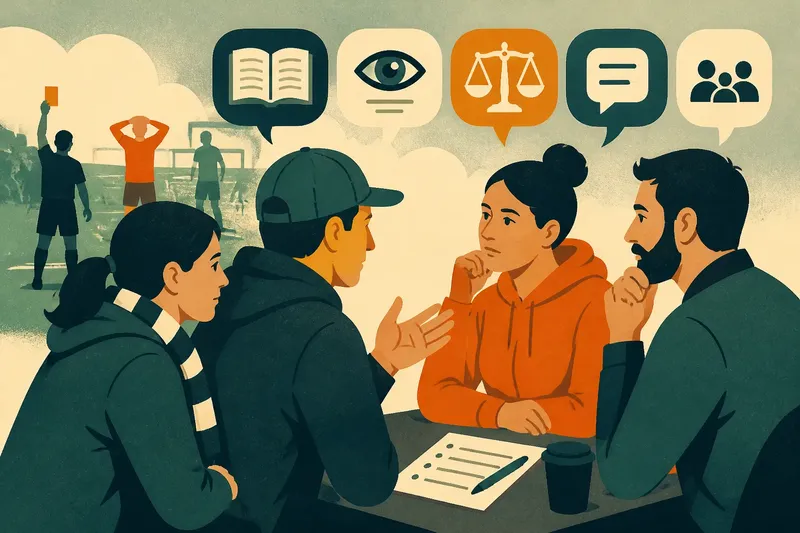
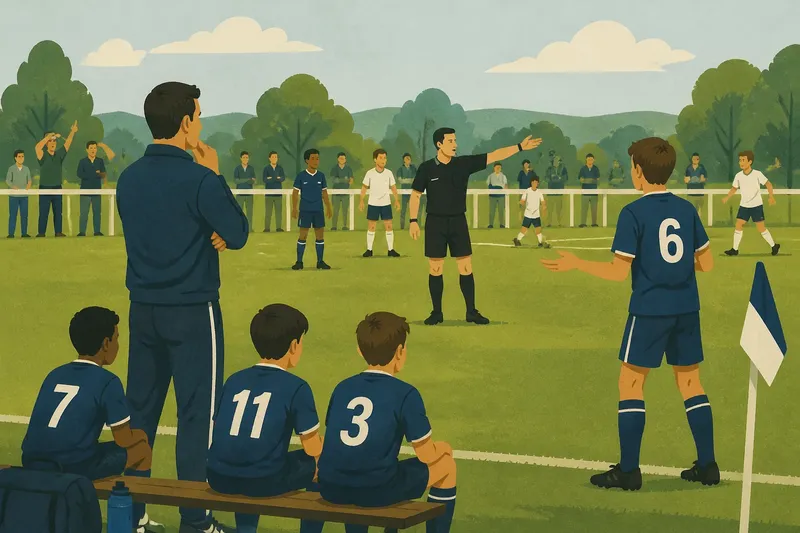
How do you talk about a disputed call after a disappointing match without turning the journey home into a trial? A better conversation after a disappointing match can start with the details of how the decision was explained, not a demand to settle whether it was right.
That approach helps supporters, club volunteers and players discuss fairness without pretending every disagreement has a neat answer. It also gives people something more useful than another round of replaying the same clip: a clearer sense of what they expect from officials, clubs and governing bodies.
Ask what kind of fairness is in dispute
People often use “unfair” to mean different things. One supporter may mean the official applied a rule incorrectly. Another may accept the rule but question whether it was applied consistently. Someone else may be upset that no one explained the decision afterwards.
Try naming the distinction before debating the call:
- Was the rule understood differently? If so, check the competition’s published rules; if the wording remains unclear, keep the disagreement open rather than claiming certainty.
- Was the decision difficult to see from the official’s position? If so, describe the sightline as uncertain; if the available view is clear, discuss that specific view rather than guessing at intent.
- Did the process seem inconsistent with an earlier decision? If so, identify both moments; if they involved different circumstances, avoid treating them as identical.
- Was the explanation missing or confusing? If so, ask the club or competition where its decision guidance is published; if no explanation is available, say that plainly rather than inventing one.
- Did a comment or reaction target a person or group? If so, name the effect and ask for it to stop; if the concern is about the call itself, keep criticism focused on the decision.
- Is the argument relying on a short clip? If so, note what happens outside the frame; if the missing context changes the question, seek a fuller account or leave that point unresolved.
These distinctions do not make anyone’s frustration less real. They help a group work out whether it is discussing the rule, its application, the process or the way people were treated.
Look at how an institution handles the decision
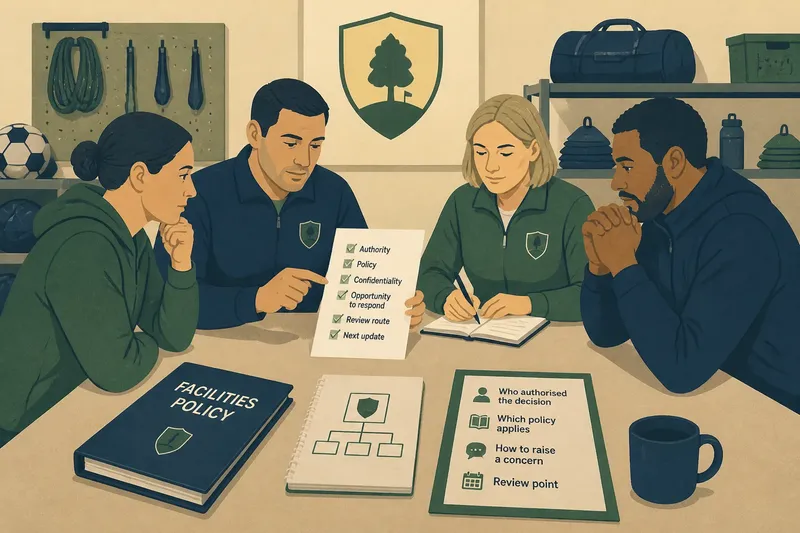
A referee’s call and an institution’s response are related, but they are not the same question. A club or competition can set expectations about how officials communicate, how complaints are received and how participants are protected from abuse.
For a supporter, the practical question might be where to find the competition rules or a published explanation. For a volunteer, it might be who is responsible for receiving a concern. A club handbook, league website or match-day information board can provide a better starting point than a rumour passed between fans.
When someone raises a concern, be precise about what they want reviewed. “I want to understand which rule was applied” asks for information. “I want the club to address the abusive messages sent to the official” raises a conduct concern. Keeping those requests distinct makes it easier for the right person to respond.
Notice when public commentary changes the stakes
Match reports, pundit panels and social posts can shape which decisions people remember. A confident caption may describe a call as “obvious” while leaving out the angle, timing or rule context that would help a reader judge it. A clip can show a movement without establishing what an official could see or what happened before recording began.
Before sharing a claim, check who published it and what material it includes. A club statement, a competition rulebook and a commentator’s interpretation serve different purposes. If a post names an official or player, consider whether sharing it adds useful context or simply directs more hostility towards a person.
Say you are reading two posts about a late penalty: one contains a short replay and calls the decision deliberate; the other links to the competition rule and describes the referee’s view as unclear. You check the rule, notice that neither post shows the full approach to the incident, and decide not to repeat the claim about intent. The resulting account is narrower: the posts disagree about how to interpret the available footage, while the clip does not resolve the official’s view.
What should a group do with an unresolved call?
Should we ask an official to explain the decision?
Use the club or competition’s normal channel and ask about the rule or process rather than demanding a personal defence. If no explanation is offered, distinguish that absence from proof that the decision was wrong.
How can a supporter challenge a claim in a group chat?
Ask for the source and the detail that supports the claim, then share a relevant rule or fuller account if you have one. If the evidence stays incomplete, describe the claim as uncertain instead of forwarding it as fact.
What if a discussion turns into abuse?
Stop amplifying personal attacks and use the club, platform or competition reporting route where appropriate. If someone faces a credible threat or immediate danger, seek help from the relevant authorities rather than handling it alone.
How can newcomers join a conversation about a rule?
Explain the situation in ordinary language and point to the published rule before using specialist terms. If the explanation still does not make sense, treat that as a reason to clarify the rule, not a reason to dismiss the question.
Keep criticism aimed at decisions and systems
Fair criticism can be direct. “I think the official missed the contact” describes a view of the decision. “The league should explain how this rule is applied” asks for institutional clarity. Neither requires speculation about someone’s motives or attacks on their character.
That boundary matters in person and online. A message naming an official can travel far beyond the original group, while a complaint sent through the club’s designated channel is more likely to reach someone responsible for handling it. If you are unsure whether a post is criticism or a personal attack, remove the name and ask whether the point still stands.
Leave the discussion with a clear record
A group does not need to agree on a call to make progress. It can leave with a precise account: what the footage appears to show, which rule people understand to apply, what remains uncertain and whether anyone wants to ask the club for clarification.
That is a useful way to talk about fairness after a match. The main phrase, better conversation after a disappointing match, need not mean changing anyone’s mind; it can mean making a careful claim, treating people responsibly and knowing what information would answer the question next.
When the next disputed decision arrives, keep the rulebook or competition guidance to hand and be cautious with claims about intent. A fairer conversation begins when people can tell the difference between what they know, what they infer and what they still need explained.